Ford "Varona Racing" body panels as driven by Mike Klebe
Regular price
FORD "VARONA RACING" COMPLETE BODYWORK SET — RACE-USED PANELS AS DRIVEN BY MIKE KLEBEStriking 1990s American Racing Livery in Ford Competition Yellow
An impressive and highly displayable collection of genuine race-used bodywork from the Ford-powered "Varona Racing" machine campaigned by driver Mike Klebe — a complete suite of panels presented in the bold, unmistakable visual language of 1990s American motorsport.
The set comprises the principal body sections of the car: the sculpted nose cowl bearing the Ford Blue Oval, the central engine cover with its dramatic air intake and NACA-style venting, and both full-length side sections complete with integrated aerodynamic elements and an original wing mirror still in place. Each panel is finished in vivid Ford competition yellow, decorated with period graphics including the Varona Racing script, the distinctive fading chequered motif along the flanks, "NICHE Events" sponsorship, a circuit-map decal, and — the detail that brings the whole set to life — the driver's name, Mike Klebe, applied to the bodywork just as it appeared in competition.
Crucially, this is no cosmetic reproduction: the panels wear their racing history openly. Stone chips, stress marks, mounting-point wear and honest battle scars from life at speed are present throughout, exactly as they came off the car — the kind of untouched, unrestored authenticity that collectors of race-used artifacts prize above all.
The presentation possibilities are exceptional. Individually, each panel is a ready-made wall display piece; together, the set forms a spectacular full-car installation for a garage, showroom, man cave or collection space — a genuine slice of American racing, in a colour that refuses to be ignored.
Race-used bodywork sets rarely survive complete; panels are typically damaged, repainted, or dispersed. To find the full complement from a single car, in original livery and honest condition, is an uncommon opportunity.
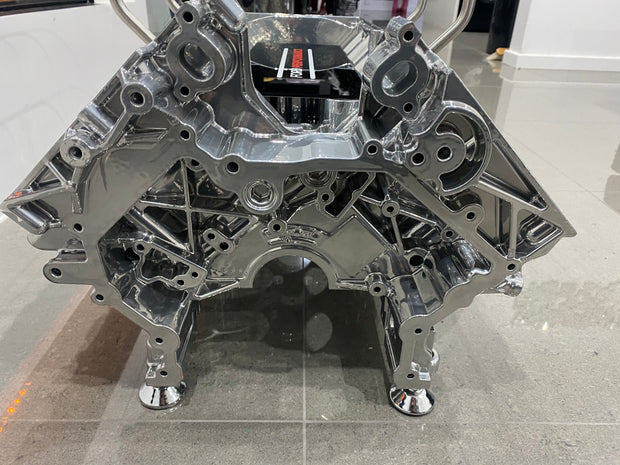
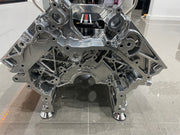
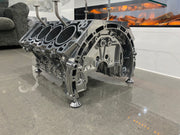
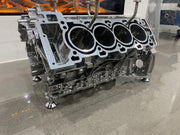
Ford Performance V8 Engine Block Coffee Table
Regular price
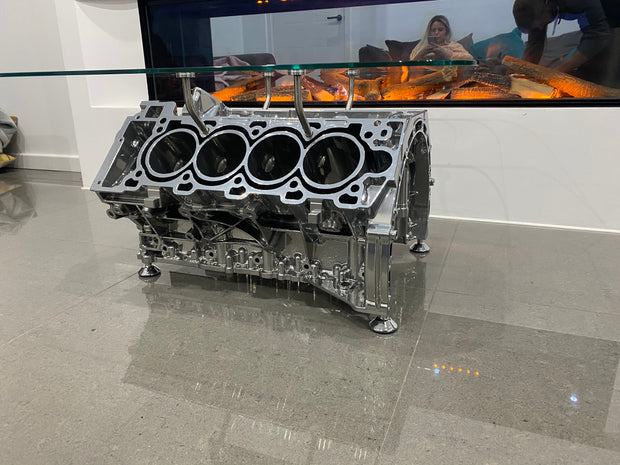
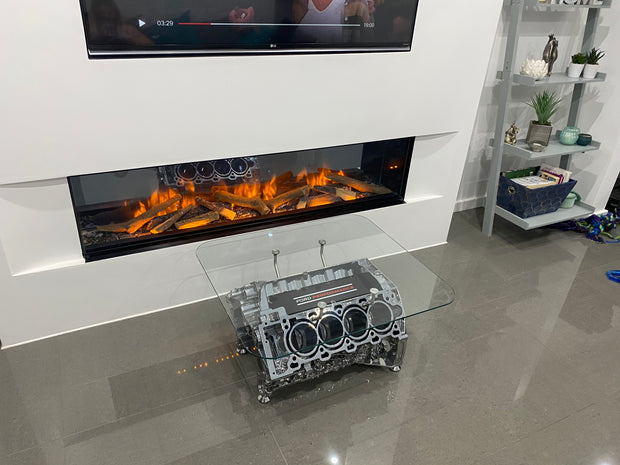
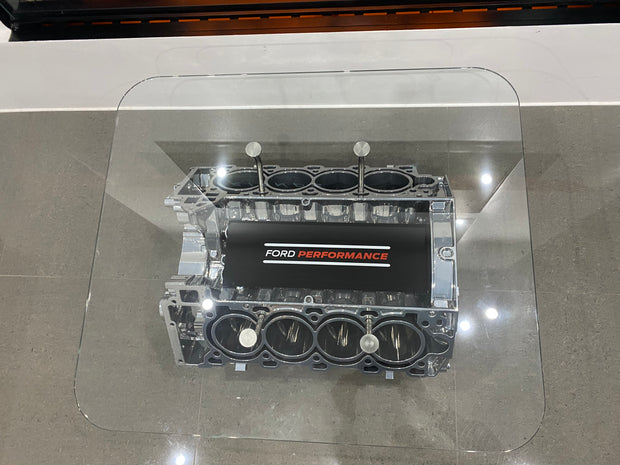
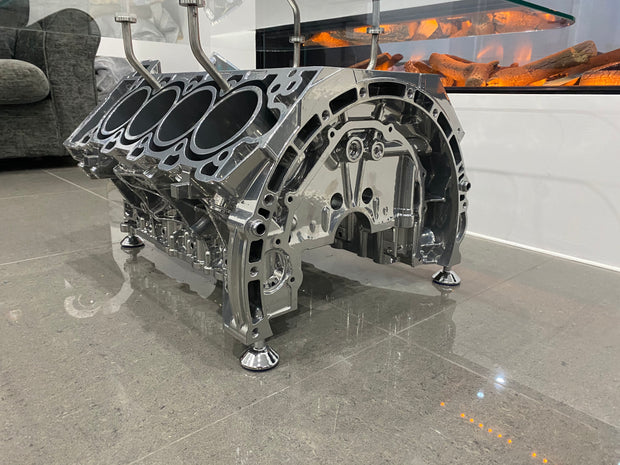
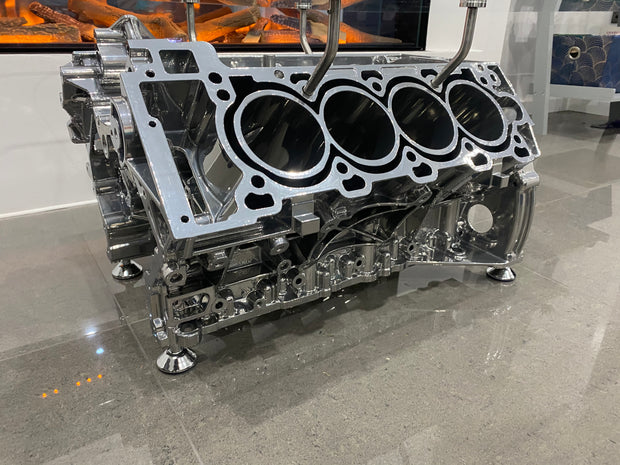
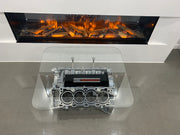
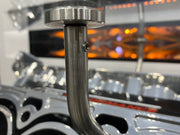
Ford Performance V8 Engine Block Coffee Table
A unique piece of automotive art; Ideal for any motor enthusiast.
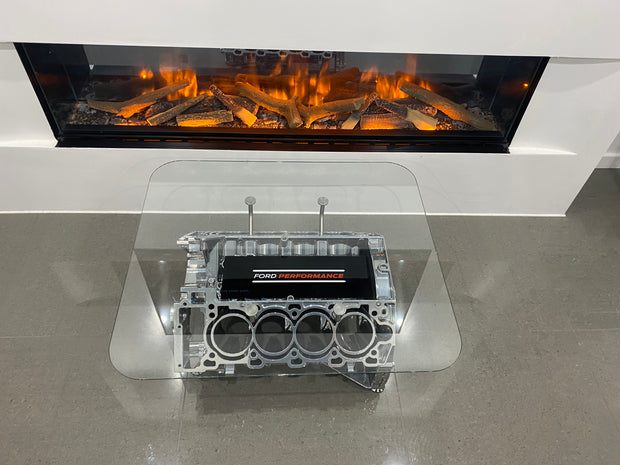
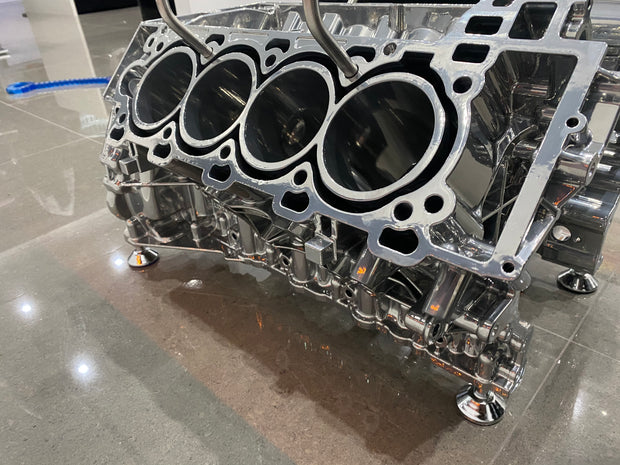
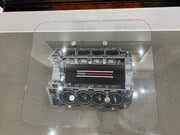
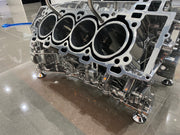
This table is a V8 engine block finished in a chrome powder coat with a black plate with Ford performance decals to finish it off.
This Engine Table has undergone a meticulous process get the showroom reflective bright chrome finish presented in the photos. The table has been completely chemically cleaned prior to finishing in the chrome powder coating.
· Includes protective feet
· Includes Glass
Table specification:
- Glass measures 650mm x 750mm (26" x 30") with polished edges and radius corners. (Safety glass – strengthened and toughened)
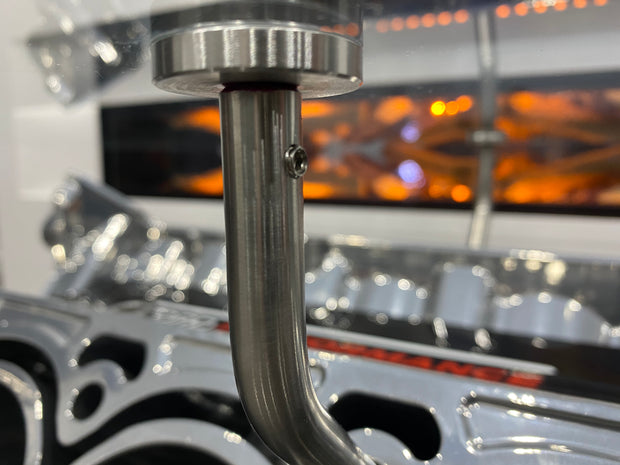
- Glass is secured to the engine via custom made mounts that fix the glass to the block, and can be removed for cleaning
- Overall height of the table is 440mm (17").
- Specially made feet a protective bottom to protect flooring from any marks.(Feet can be removed if not to your taste)- 8 wine bottles able to be placed into the piston bores for display.
- Weight: 30kg (66 lbs)
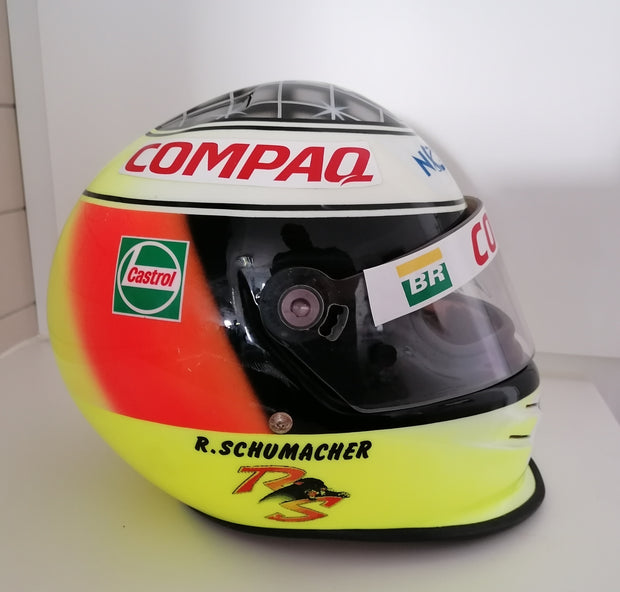
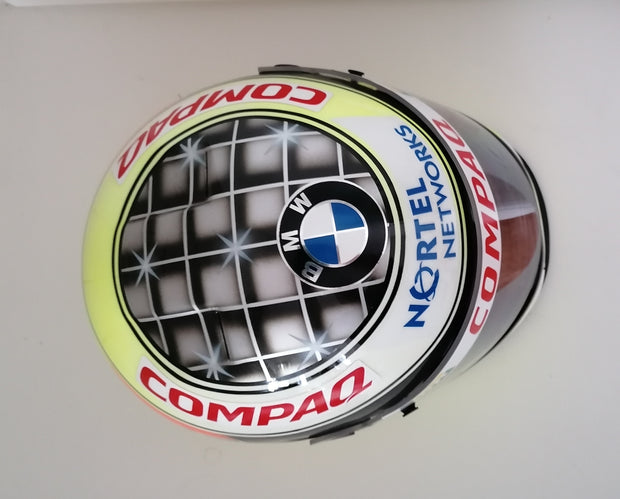
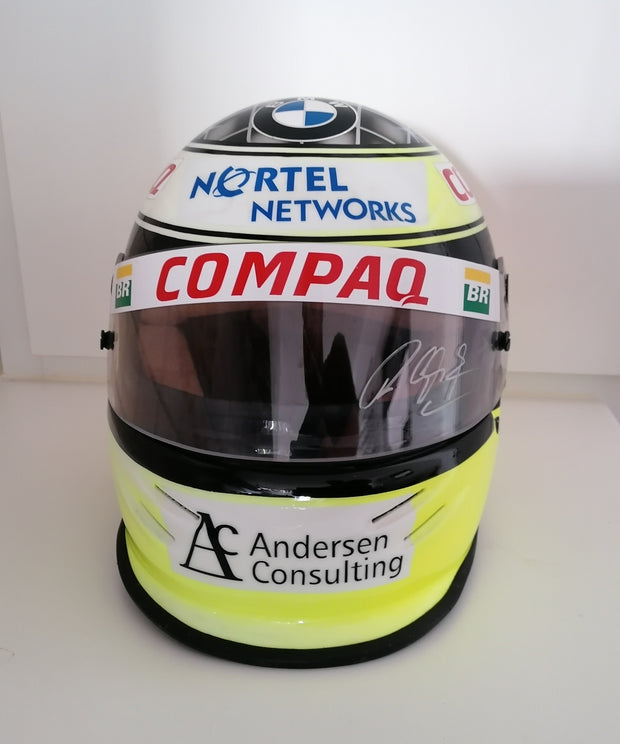
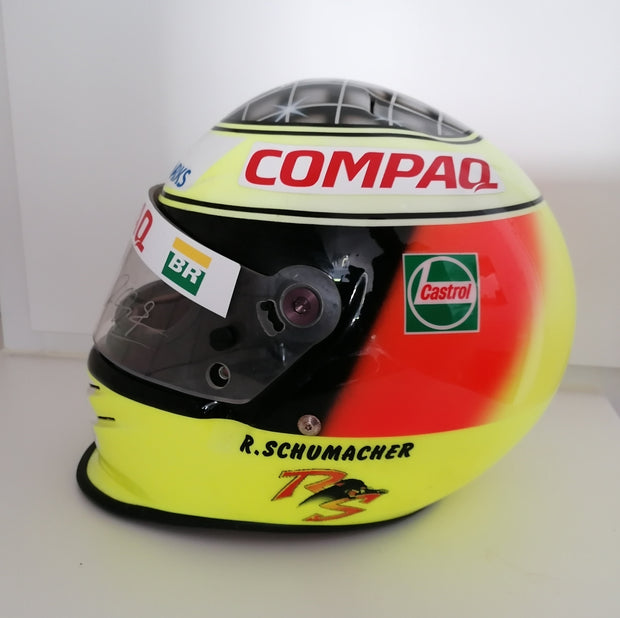
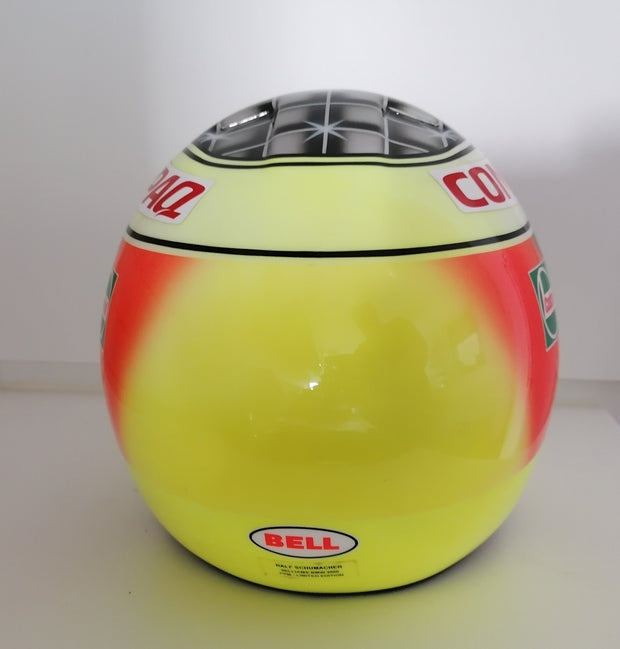
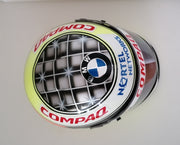
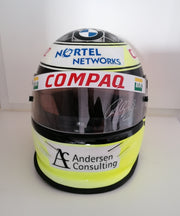
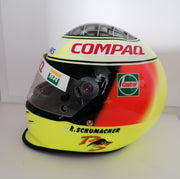
Genuine 1:1 Scale Replica Helmet of Ralf Schumacher
Regular price
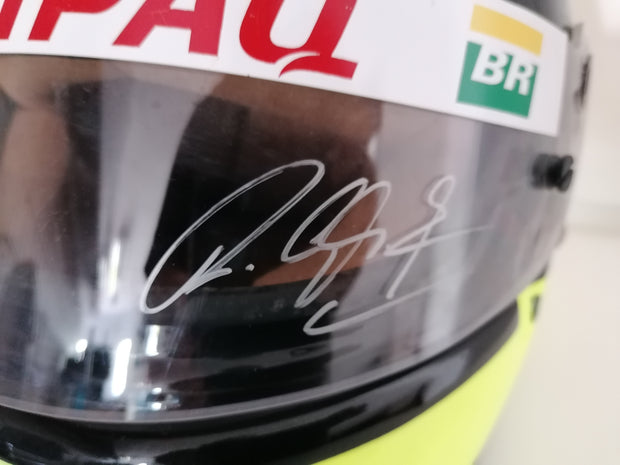
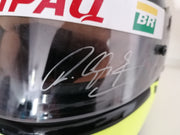
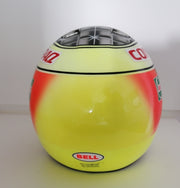
Elevate your collection with the pinnacle of racing memorabilia – a genuine 1:1 scale replica of Ralf Schumacher's 2002 racing helmet. This exquisite piece has been authentically hand-signed by Ralf Schumacher himself, encapsulating the essence of his racing spirit. The helmet showcases the vibrant and iconic livery of the era, complete with sponsor logos from Nortel Networks, Compaq, and Andersen Consulting, emphasizing its historical authenticity. With its striking design and fluorescent accents, this helmet is a true testament to the legacy of a Formula One star. Each signature on this limited edition replica has been meticulously verified, ensuring this is a must-have artifact for enthusiasts and collectors alike. Display this helmet to make a statement in your home, office, or gallery, and own a piece of motorsport history.
Lot: A Genuine Illuminated Double-Sided Lamborghini Dealership Sign, 1990s
A large circular double-sided illuminated dealership sign, of drum construction with a weathered aluminium/chrome-effect banding to the rim, each face displaying the Lamborghini shield in gloss black ground with the raging bull rendered in gold relief, surmounted by the "LAMBORGHINI" wordmark in bold gold lettering — identical to both faces for legibility from either direction of approach. The sign retains its original wall-mounting bracket and steel support arm, both period-correct to the fixture and showing consistent oxidation and wear entirely in keeping with genuine decades-long exterior or forecourt service.
Sourced directly from a former official Lamborghini dealership, this example carries strong, honest patina throughout: mottled discoloration and light corrosion to the rim banding, oxidation to the mounting hardware, and a softly weathered sheen to the lens faces, all consistent with sustained authentic use rather than artificial ageing. Despite the surface character, both faces remain vivid and undamaged, the black and gold graphics crisp with no cracking, fading, or delamination, and the sign is reported to be in full working order, illuminating correctly when connected.
The combination of confirmed dealership provenance, matching original supports, and genuine period wear makes this a particularly desirable example for collectors seeking authenticity over restoration — a sign that reads unmistakably as having spent its working life exactly where it should have: on the wall of a Lamborghini showroom.
Dimensions: Approximately 88 cm diameter (drum), with original wall-mount support arm and bracket Condition: Genuine dealership patina throughout; reported fully working; original supports present and intact Provenance: Ex-official Lamborghini dealership, in situ for several decades
George Russell Race Used Gloves
Regular price
George Russell original worn driving gloves!
Here's your chance to purchase a pair of driving gloves used by George Russell. Authenticity is guaranteed with a certificate of authenticity and a lifetime money-back guarantee!
GERHARD BERGER — RACE-WORN McLAREN-HONDA DRIVER'S SUIT
Regular price
GERHARD BERGER — RACE-WORN McLAREN-HONDA DRIVER'S SUITFormula One World Championship, 1991 SeasonManufactured by Stand 21 Racewear, Talant, France
A remarkable artifact from one of the most dominant chapters in Formula One history, this race-worn driver's suit was used by Gerhard Berger during the 1991 Formula One World Championship season, in which he campaigned the McLaren MP4/6 alongside teammate and eventual triple World Champion Ayrton Senna, powered by the Honda RA121E V12 engine. McLaren-Honda secured both the Constructors' Championship through the combined efforts of Senna and Berger that year.
The suit is constructed in the iconic Marlboro McLaren livery of scarlet red with white pinstripe detailing and white contrast stitching throughout — among the most recognisable and evocative colour combinations in the history of Grand Prix racing. The chest bears a full complement of period sponsor embroidered patches: Marlboro McLaren International, Honda, Shell, Boss Men's Fashion, Goodyear, Tag Heuer, and Courtaulds — a veritable roster of the sport's commercial golden era. The reverse presents a large Marlboro chevron above a Honda patch, with the Stand 21 FIA homologation label — reading Norme 1986 / 1986 Standard / 04.106.FFSA.89 — embroidered at the collar.
The waist belt is embroidered in white script with the driver's name, Gerhard Berger, alongside a Stand 21 Racewear patch bearing the red-and-white Austrian national flag — a quietly personal detail on an otherwise boldly branded garment. The suit retains its original Stand 21 brass zip pull. The interior label confirms manufacture at Stand 21's facility at 12 Rue des Novailes, 21240 Talant, France, and certifies production to FIA 86 standards.
Crucially, this suit bears the personal initials Y.M. — those of Yves Morizot, founder and guiding visionary of Stand 21 — discreetly marked within the lining. Morizot founded Stand 21 in 1970 and by 1977 was clothing over 80% of Formula One drivers in his innovative, multi-layer, fire-resistant suits. A safety pioneer by conviction, it was a fiery Formula 3 accident at Dijon in 1970 that led him to abandon a career as a baker and dedicate his life to protecting racing drivers. That this suit passed directly from Morizot's private collection into the present offering speaks to the esteem in which he held it — retained not as inventory, but as a personal memento of an era and a driver he outfitted at the very pinnacle of the sport.
Towards the end of 1991, Berger found his form in the MP4/6, out-qualifying teammate Senna at the Portuguese, Spanish, and title-deciding Japanese Grands Prix — claiming pole position at the latter two events. At Suzuka, Berger qualified on pole and led the race before Senna moved past him; Senna then slowed at the end, returning the gesture in a celebrated act of sportsmanship between the two close friends.
The suit presents in excellent overall condition consistent with race use, retaining the texture, patina, and integrity of a garment that was worn at the sharp end of the world's most demanding motorsport competition. Together, the provenance chain — from paddock to the personal archive of the man who made it — renders this one of the most intimately documented McLaren-Honda suits that could conceivably come to market.
Exhibited in a private European collection.
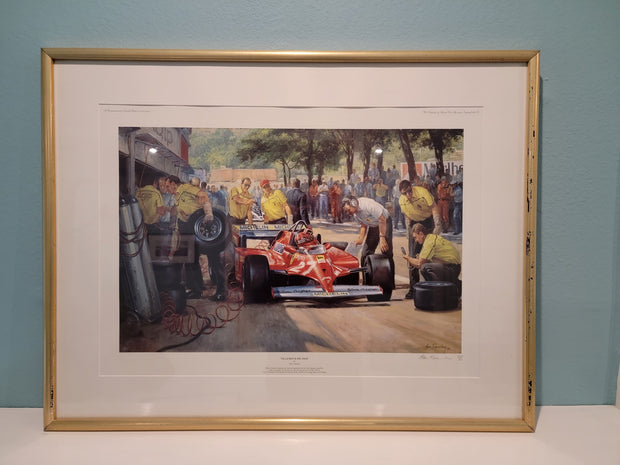
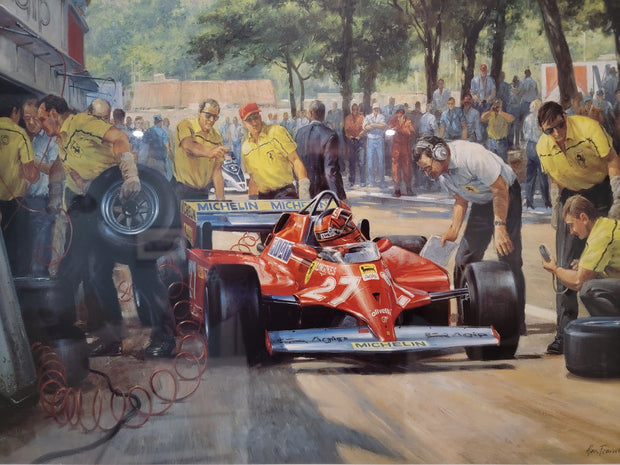
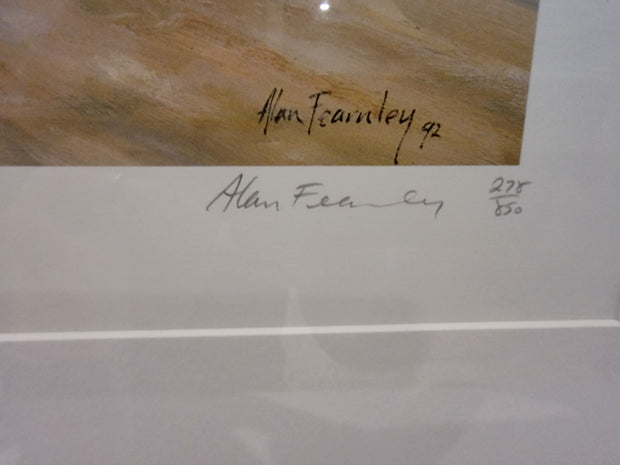
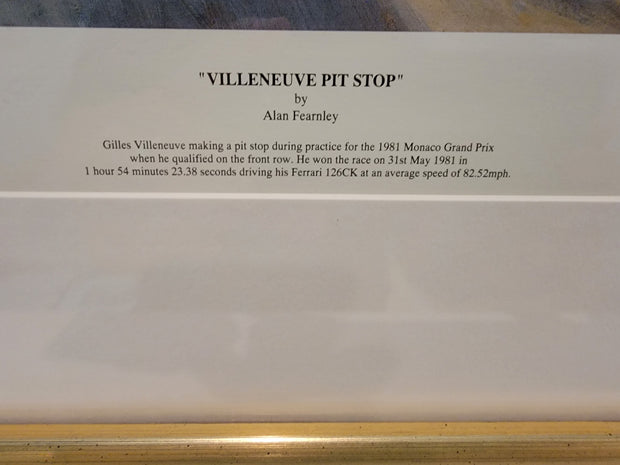
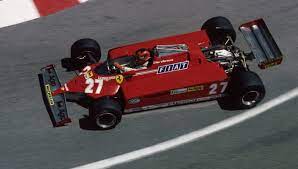
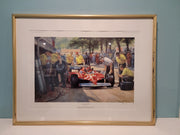
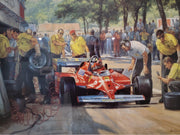
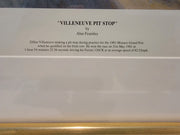
Gilles Villeneuve "Villeneuve Pit Stop" by Alan Fearnley
Regular price
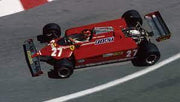
Gilles Villeneuve making a pit stop during practice for the 1981 Monaco Grand Prix when he qualified on the front row,
He won the race on 31st May 1981 in 1 hour 54 minutes driving his Ferrari 126 CK at an average speed of 82.52 mph.
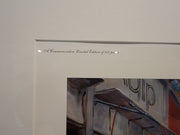
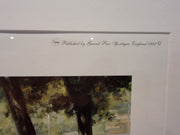
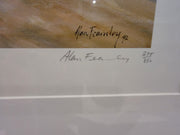
Hand signed and numbered by Alan Fearnley.
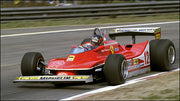
Gilles Villeneuve 1979 Ferrari Bell Star Full size replica helmet
Regular price
GILLES VILLENEUVE — 1979 FERRARI BELL STAR FULL-SIZE REPLICA HELMETBell Star III · Marlboro / Labatt / Smeg / Matras livery
Few objects in the pantheon of Formula One memorabilia carry the emotional voltage of a Gilles Villeneuve helmet. This superbly realised full-size replica captures the precise livery worn by the French-Canadian legend during what remains, by universal consensus, the most thrilling season of his tragically brief career.
The helmet is a Bell Star — the definitive racing headwear of the late 1970s Formula One paddock — rendered in Villeneuve's signature vermillion orange and midnight blue, the bold geometric forms of its livery as arresting today as they were on the grid at Kyalami, Long Beach, and Watkins Glen. The helmet carries the four sponsor legends that defined Villeneuve's 1979 campaign: Marlboro, Labatt, Smeg and Matras — faithfully applied to both flanks. To the front, the smoke-tinted visor bears the printed Labatt decal, replicating the period-correct presentation of the original race-worn examples. To the rear, the iconic Bell oval badge anchors the composition, while the interior reveals a red SNELL certification label and the Safety Helmet Council of America approval sticker in period yellow — both essential authenticating details of late-1970s Bell production.
The 1979 season represented Villeneuve's finest Formula One campaign. Piloting the Ferrari 312T4, he took the chequered flag on three occasions and stood on the podium four further times, finishing the World Championship as runner-up with 47 points — four behind his teammate Jody Scheckter. Yet statistics alone fail to convey what this season meant to the sport. It was not merely Villeneuve's results that captured imaginations — it was how he drove. He possessed an irrepressible will to win and a fearless approach that bordered on the reckless, yet was underpinned by astonishing car control and spatial awareness.
No single episode better encapsulates this quality than the closing laps of the 1979 French Grand Prix at Dijon-Prenois. Villeneuve engaged in a ferocious wheel-to-wheel duel with René Arnoux, the pair trading positions multiple times across the final lap, making contact on several occasions yet somehow keeping their cars alive to the flag — a passage of racing so viscerally improbable that it has never been surpassed in the sport's history. Then came Monza, where, in an act of chivalry as rare as his talent, Villeneuve — knowing he had only to overtake his teammate to claim the World Championship — held position behind Scheckter, his integrity ensuring Ferrari secured both titles.
Villeneuve was cast in a heroic mould. Some thought him wonderful, embodying all those romantically traditional qualities which make Formula One such a compelling sport. Either way, he was undoubtedly a great driver who knew no other way to race than flat-out, at all times. He remains, four decades after his death at Zolder in 1982, the sport's pre-eminent romantic figure — beloved by the Tifosi, revered by his peers, and immortal in the memory of anyone who ever watched him drive.
This helmet replicates an artefact of that defining year — a year of three victories, one wheel-banging masterpiece in France, and a selfless act of sportsmanship that cemented Villeneuve's standing not merely as a great racing driver, but as a man of uncommon character. It is presented in excellent condition, complete with its original Bell Helmets presentation bag.
A rare and evocative tribute to the most celebrated and beloved driver never to have won the Formula One World Championship.
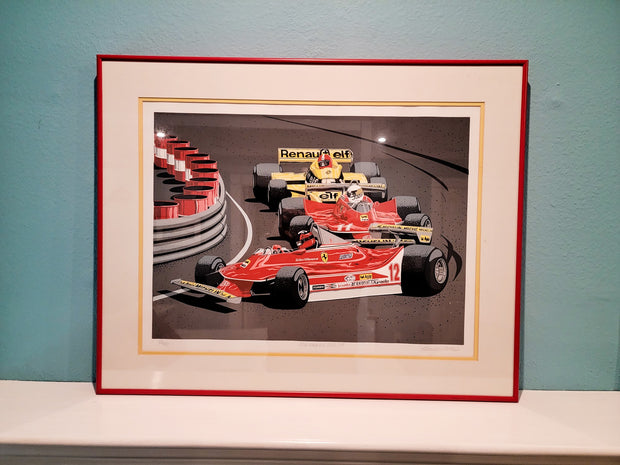
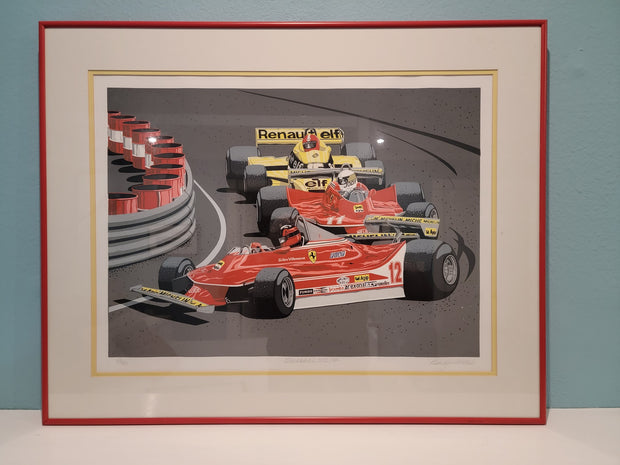
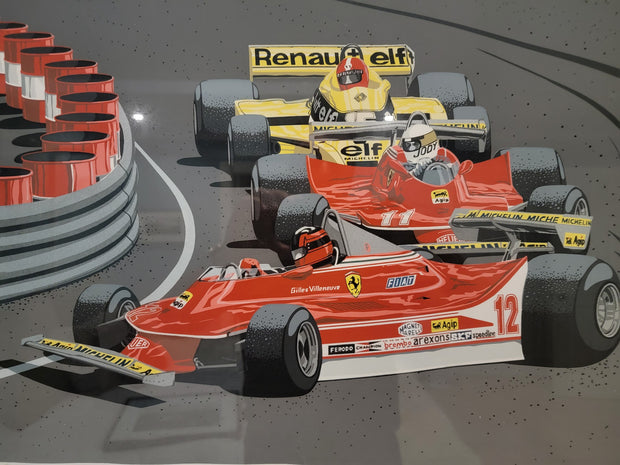
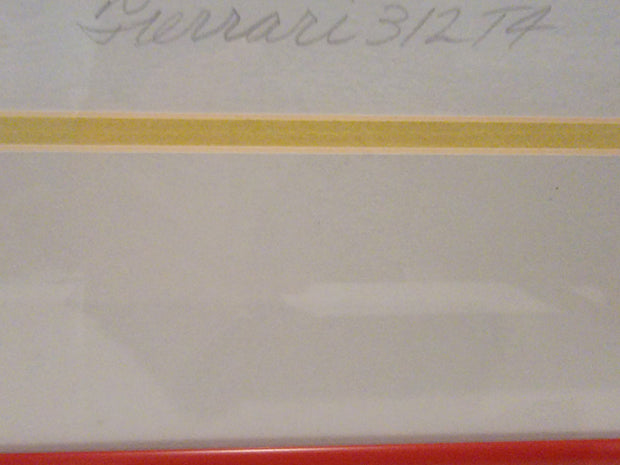
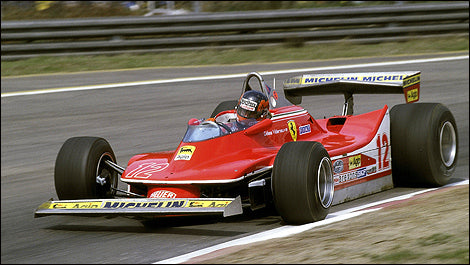
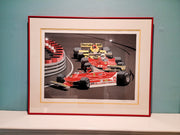
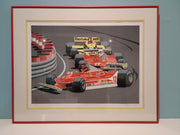
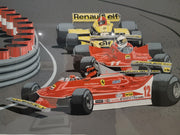
Gilles Villeneuve FERRARI 312 T4 Limited Edition Serigraph by Randy Owens
Regular price
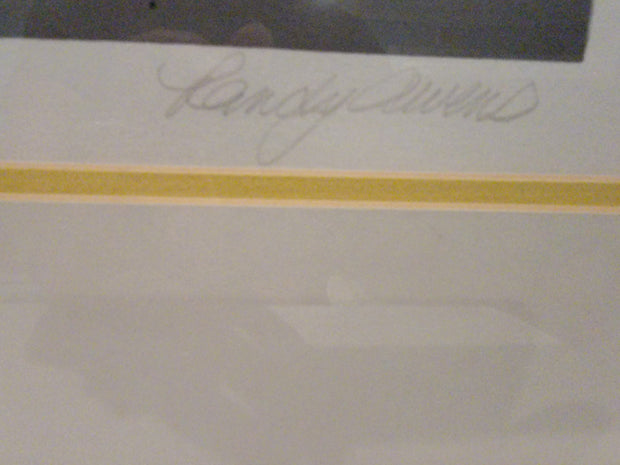
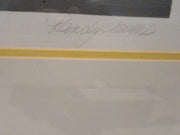
Limited Edition Print. It is a beautiful limited print by Randy Owens depicting Gilles Villeneuve driving his Ferrari 312 T4. It has been hand signed, titles and numbered by Randy Owens.
Goodyear Eagle Race-Used Slick Tyre — 1993 Brazilian Grand Prix Driven by Ayrton Senna aboard the Marlboro McLaren Honda MP4/8
Regular price
Goodyear Eagle Race-Used Slick Tyre — 1993 Brazilian Grand PrixDriven by Ayrton Senna aboard the Marlboro McLaren Honda MP4/8Hand Signed & Accompanied by McLaren International Certificate of Authenticity
An artefact of profound historical and emotional significance, this full-size Goodyear Eagle slick tyre was fitted to the Marlboro McLaren Honda MP4/8 and used in competition by Ayrton Senna at the 1993 Brazilian Grand Prix — the opening round of the Formula One World Championship season, held at the Autodromo José Carlos Pace, Interlagos, São Paulo.
The Tyre
A full-dimension F1 slick, the tyre retains its authentic race-worn condition — the rubber surface bearing the telltale heat cycling and wear marks consistent with Grand Prix competition use. The iconic GOODYEAR EAGLE lettering in bold yellow stands proud across the sidewall, with original team markings and compound identifiers still visible.
Signed directly onto the tyre in white marker, Senna's signature is accompanied by the year "93" and the inscription "Brazil" — a deeply personal dedication to his home race, in front of his beloved Brazilian fans, on a day that would etch itself permanently into Formula One folklore.
The Car — Marlboro McLaren Honda MP4/8
The McLaren MP4/8 was a highly competitive yet ultimately transitional machine. Designed by Neil Oatley and powered by a Ford HB V8 engine — a switch from the dominant Honda unit of prior seasons — the car represented McLaren's first season without Honda power since 1982. Despite this, the MP4/8 proved a formidable challenger, and in the hands of Senna, it remained a race-winning proposition throughout the year.
The Race — 1993 Brazilian Grand Prix, Interlagos
The 1993 Brazilian Grand Prix was one of the most dramatic and emotionally charged races of the entire decade. Senna — racing in front of his home crowd — delivered a masterclass of wet-weather driving and sheer determination, winning the race despite suffering from severe arm and wrist cramps in the closing laps due to a stuck sixth gear that forced him to steer one-handed through the final circuits.
At the finish line, Senna was so physically exhausted he had to be lifted from the cockpit by his mechanics. His subsequent victory celebration — barely able to stand, arms raised to the sky — remains one of the most iconic and moving images in the sport's history. It was his first win of the season and his first Brazilian Grand Prix victory, meaning everything to both him and the nation.
The race was also notable for the emergence of a young Michael Schumacher, then driving for Benetton, who finished third — a glimpse of the generational rivalry that was already beginning to define the era.
Certificate of Authenticity
Presented in a white mount frame, the McLaren International Certificate of Authenticity — signed by Ron Dennis, Managing Director — formally certifies the component as follows:
Component: Goodyear Eagle Tyre
Car: Marlboro McLaren Honda MP4/8
Driver: Ayrton Senna
Race: Grand Prix Brazil 1993
Details: Used Tyre
This certificate, issued directly by McLaren International Limited and bearing Ron Dennis's signature, provides unimpeachable factory provenance — an assurance rarely available with race-used material of this era.
A once-in-a-generation collectors' piece. Race-used, personally signed, factory-certified, and tied to one of the most emotionally defining moments in the life of the greatest driver in Formula One history — offered here in its original, unaltered condition.
Estimate: Upon request
GoodYear leather bag
Regular price
Rare and original Goodyear laether bag with strap.
50 cm x 28 cm x 18 cm (20" x 11" x 7")
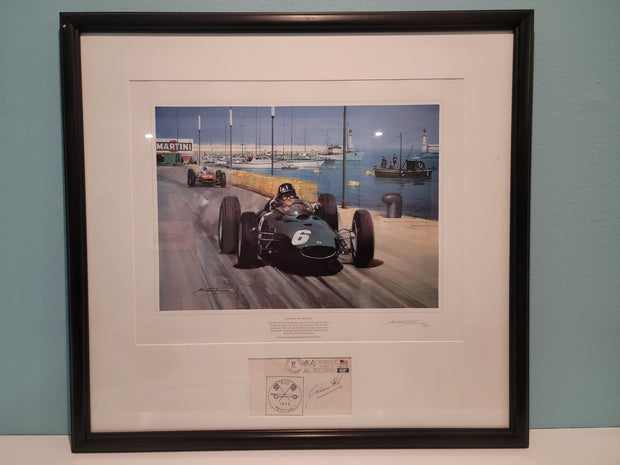
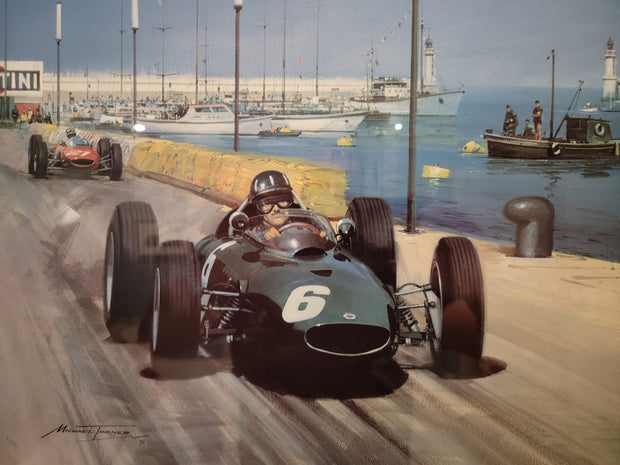
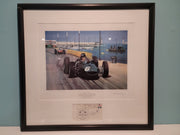
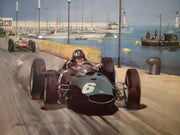
Graham Hill 'Master of Monaco' by Michael Turner
Regular price
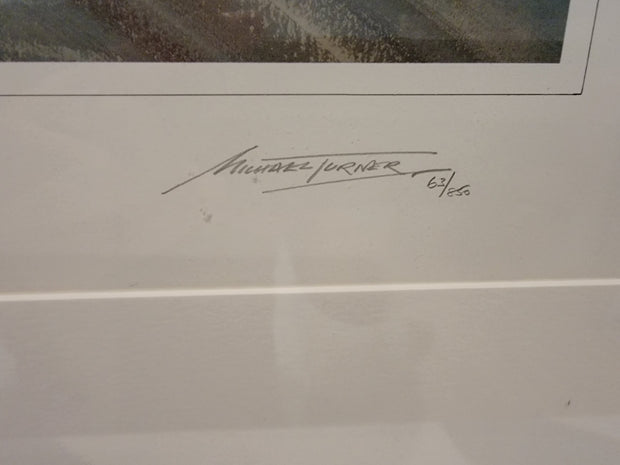
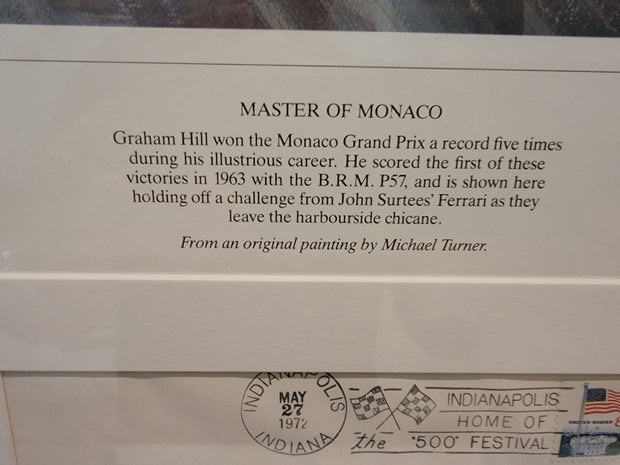
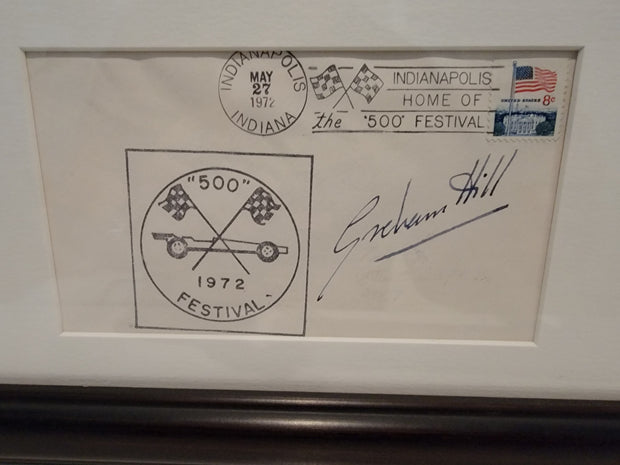
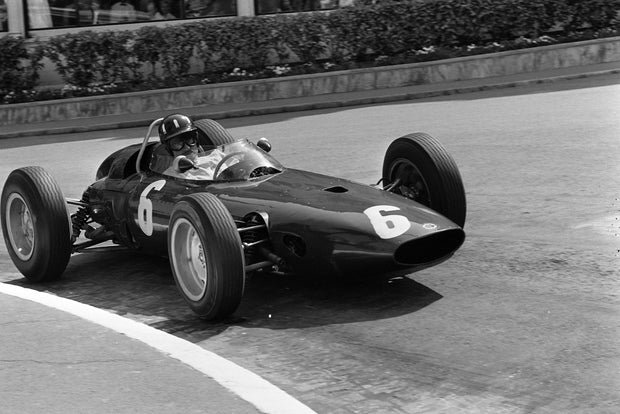
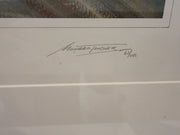
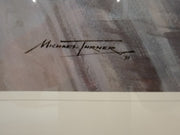
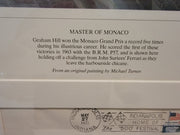
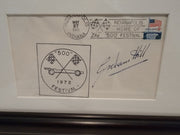
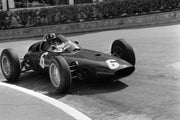
Limited Edition Print. Graham Hill, in the B.R.M., fends off a challenge from John Surtees' Ferrari in 1963, to score the first of his five victories in the Principality.Limited edition from an original painting from Turner. Hand signed and numbered by Michael Turner. It comes framed and accompanied by a 1972 card from Indianapolis 500 Festival signed by Graham Hill.
Grande Cocotte sculpture by Gabriel Voisin
Regular price
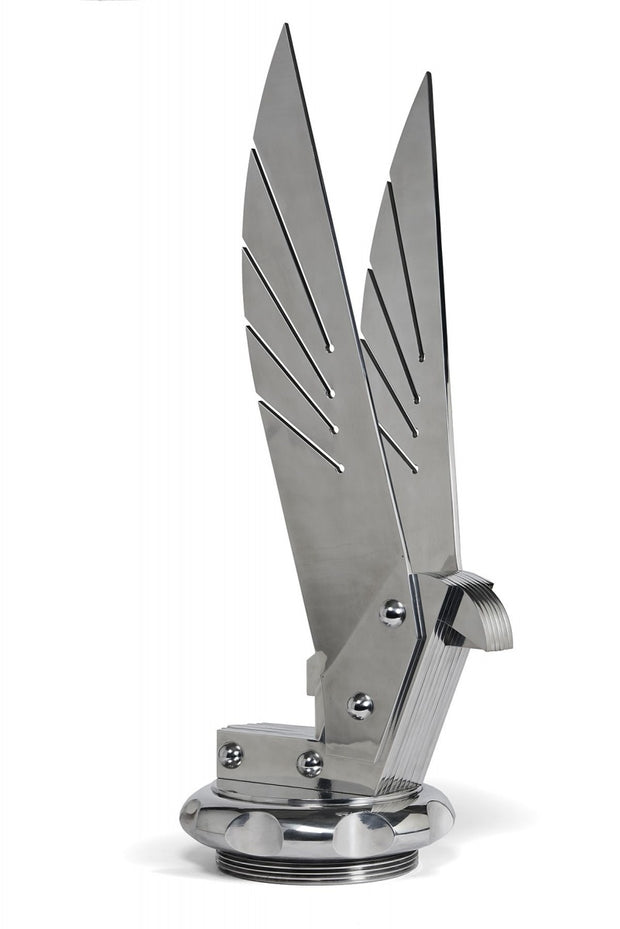
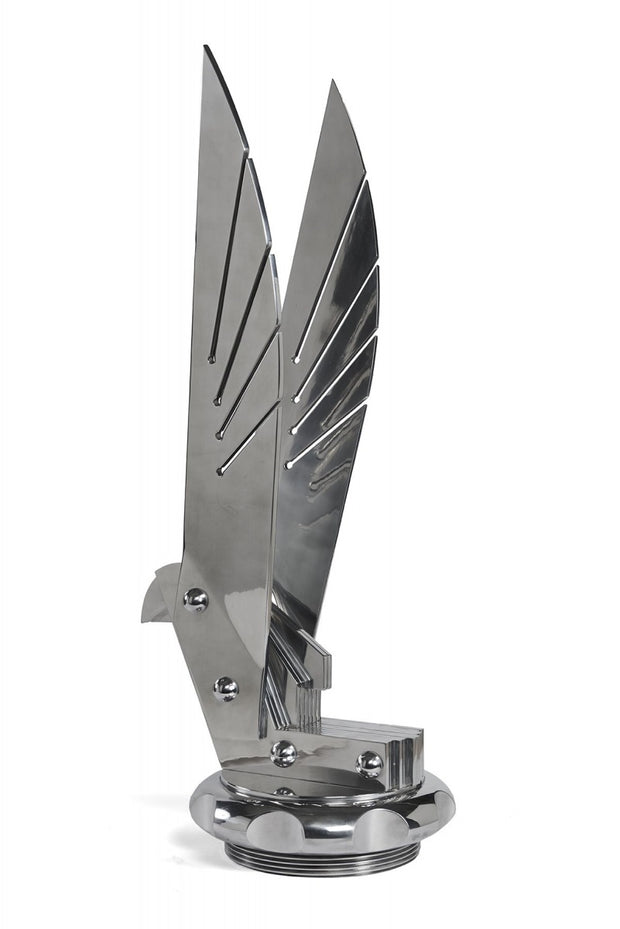
‘La Cocotte’ aluminium sculpture
A large and imposing limited edition aluminium sculpture inspired by the automobile mascot designed by Gabriel Voisin (1880-1973) in 1920 for his own cars, which were produced in limited number, until the late 1930s. (Note: Cocotte is the French word for ‘chicken’ and is also the slang word for ‘prostitute’).
Like the original mascot, this 40 inch (100 cms) tall sculpture is made entirely by hand from aluminium panels bolted together. Incorporating a giant radiator cap carved from a solid aluminium billet, the sculpture epitomizes Art Deco design. French, or recent manufacture, one of only 9 made.
Height 40 inches (100 cms).
JAMES HUNT ORIGINAL BRAKE DUCT SET, 1974 FORMULA ONE SEASON
Regular price
HESKETH 308 — ORIGINAL BRAKE DUCT SET, 1974 FORMULA ONE SEASON
James Hunt · Ford-Cosworth DFV · Harvey Postlethwaite
Offered here is a pair of original brake cooling ducts, removed directly from the Hesketh 308 Formula One car during the 1974 World Championship season — surviving technical artefacts from one of the most romantically audacious chapters in the history of Grand Prix racing.
The ducts are fabricated in period-correct lightweight sheet aluminium alloy, hand-formed and welded in the manner characteristic of British specialist motorsport fabrication of the early 1970s. Each unit presents the distinctive swept, curved profile engineered to channel airflow from the front of the car's bodywork into the brake caliper and disc assembly — a critical thermal management function in an era when braking distances, tyre temperatures, and component longevity were often the decisive margins between a finish and a retirement. The metal surfaces carry the natural oxidisation, workshop patina, and the compelling evidence of race-use that can only accumulate across a season of competitive grand prix campaigning. The pieces are presented in two sections, the larger upper duct and the complementary lower scoop, together forming the complete assembly as originally installed to the car. They are in unrestored, as-removed condition — exactly as one would wish of components of this provenance.
The Hesketh 308 was designed and engineered in-house by Harvey Postlethwaite — the team previously having run a 1973 March 731 — with the new chassis assembled by B.S. Fabrication Ltd. in Luton. When James Hunt first laid eyes on the car, he pronounced it simply "beautiful," equally impressed by the roomy cockpit tailored to fit his relatively large frame. The 308's designation referred directly to its powerplant: the three-litre, eight-cylinder Ford-Cosworth DFV that was the engine of choice for independent constructors of the era.
The car made its first Grand Prix appearance at South Africa in 1974, proving quick but ultimately unreliable across the season, suffering a variety of transmission and mechanical breakages. Yet the headline results tell only part of the story. At its very debut at the Race of Champions at Brands Hatch, Hunt qualified the 308 on pole position. At the non-championship BRDC International Trophy at Silverstone, Hunt won the race outright, beating the majority of the regular Formula One field. Three championship podium finishes followed across the season — in Sweden, Austria and the United States — sufficient to place Hesketh sixth in the Constructors' Championship and Hunt eighth in the Drivers' standings, a remarkable achievement for a team in its first full season as a constructor.
What made Hesketh Racing extraordinary was not merely its results but its very existence. The team had already made waves with their unconventional attitude, famously rejecting corporate sponsorship and bringing a refreshing irreverence to the paddock. The car ran immaculate white bodywork, uncluttered by commercial logos, adorned only with the team's cherished teddy bear roundel — a quiet act of defiance against the sponsorship machinery that was rapidly consuming the sport. The performances of Hunt and Hesketh Racing silenced critics who had dismissed the team as playboys out of their depth, and established Hunt as one of Formula One's rising stars.
The following season, with the refined 308B, Hunt and Hesketh would achieve the impossible — defeating Niki Lauda's dominant Ferrari at Zandvoort to claim one of the best underdog triumphs in F1 history. These brake ducts were manufactured and run in the season immediately preceding that victory — the season in which the foundations of it were laid, and in which the Hesketh 308 first announced itself as a genuine force in grand prix racing.
Original Hesketh Racing components from the 1974 season are extraordinarily scarce. The team operated as a small, privately funded constructor with no commercial incentive to preserve or archive its technical parts, and the passage of fifty years has seen the vast majority of such material lost to time. A brake duct set of this completeness and condition, with direct association to James Hunt's breakthrough years and the Hesketh 308 programme, represents a genuinely irreplaceable piece of Formula One's most colourful and beloved era.
From the most spirited privateer adventure in the history of Formula One — surviving metalwork from the car that made James Hunt a star.
Jean Alesi Race Used Gloves
Regular price
Jean Alesi original worn driving gloves!
Here's your chance to own a pair of racing gloves used by Jean Alesi. These gloves are also signed by him. They were worn in several races in 2005, including one at the Hockenheimring. Authenticity is guaranteed with a certificate of authenticity and a lifetime money-back guarantee!
JOHN PLAYER SPECIAL — TEAM LOTUS ILLUMINATED DOUBLE-SIDED PADDOCK SIGN
Regular price
Original Period Promotional Lightbox with Wall-Mount Brackets
A magnificent and exceptionally rare survivor of Formula One's most celebrated sponsorship identity: an original, double-sided illuminated John Player Special / Lotus lightbox sign, presented in the immortal black-and-gold JPS livery.
Each face of the sign carries the iconic interlocking JPS monogram in gold above "John Player Special" lettering in the marque's distinctive serif typeface, over the Lotus roundel bearing the ACBC badge, framed by the signature gold coachline border on gloss black. The lower field carries period partner branding — elf, Champion, and Pirelli — completing a composition that is, quite simply, one of the most beautiful graphic identities ever applied to motorsport.
According to the provenance accompanying this lot, the sign was displayed in the paddock at the JPS Lotus VIP hospitality village during the 1993 season, and it has never been commercially reproduced — this is a unique piece of team promotional infrastructure, not retail merchandise.
DESCRIPTION & CONSTRUCTION
The sign is of substantial professional construction: a deep-section lightbox cabinet in black-finished metal and ribbed profile, glazed on both faces with printed panels, and internally illuminated — the twin-faced format confirming its origin as a hanging or wall-projected paddock and hospitality sign, designed to be read from both directions. It retains its original electrical fitting and, importantly, its original cast-metal wall-mount brackets, allowing it to be installed exactly as deployed in period.
A maker's label to the cabinet identifies the manufacturer as a Brussels-based specialist plastics and signage house, consistent with professional European promotional production of the era.
The sign measures approximately 54 in × 32 in × 8 in (135 cm × 80 cm × 20 cm).
CONDITION
Offered in great overall condition commensurate with genuine period use: the printed faces remain strong, glossy, and vividly contrasted, with the gold graphics crisp throughout. The cabinet shows honest light wear to its edges and top surface — the patina of an authentic working paddock article rather than a reproduction. The illumination hardware is present with original plug fitting; as with all vintage electrical signage, professional inspection is recommended before sustained use.
THE JPS LOTUS LEGACY
No livery in the history of motor racing carries the aura of John Player Special and Lotus. From Emerson Fittipaldi's 1972 World Championship in the Lotus 72, through Mario Andretti's 1978 title in the ground-effect 79, to Ayrton Senna's electrifying seasons in the 97T and 98T, the black-and-gold cars defined an aesthetic that transcended the sport. Original JPS Lotus promotional material — particularly large-format illuminated signage produced for team and hospitality use rather than public sale — is among the most sought-after of all motorsport advertising artefacts, and double-sided examples with original mounting hardware essentially never appear on the open market.
For the collector of Lotus, of Senna-era Formula One, or of great advertising design in its own right, this is a genuine centrepiece opportunity.
THE MEMORABILIA EXPERIENCEFine Motorsport Collectibles
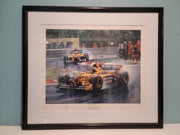
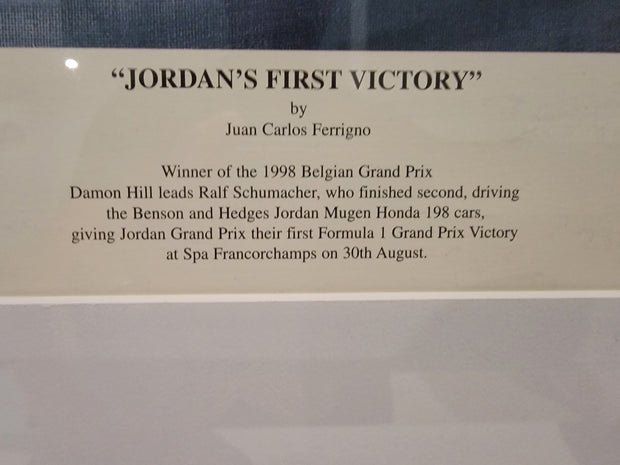
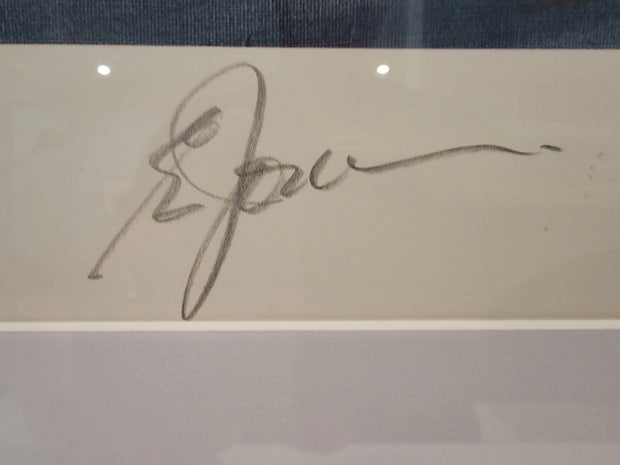
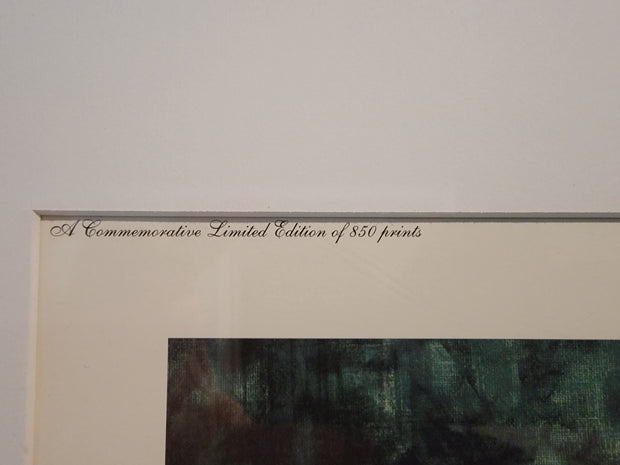
Jordan’s First Victory Signed by Eddie Jordan by Juan Carlos Ferrigno
Regular price
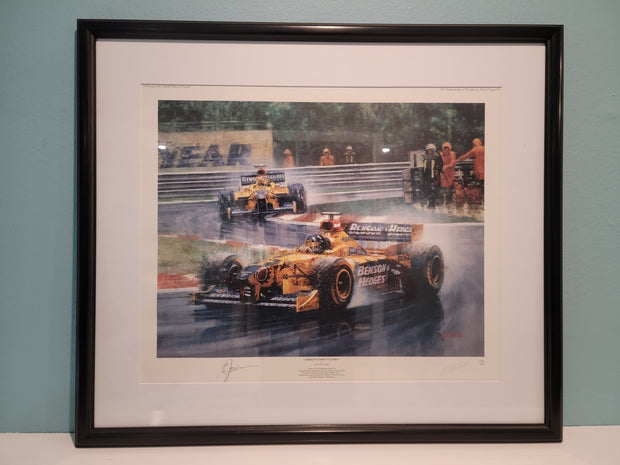
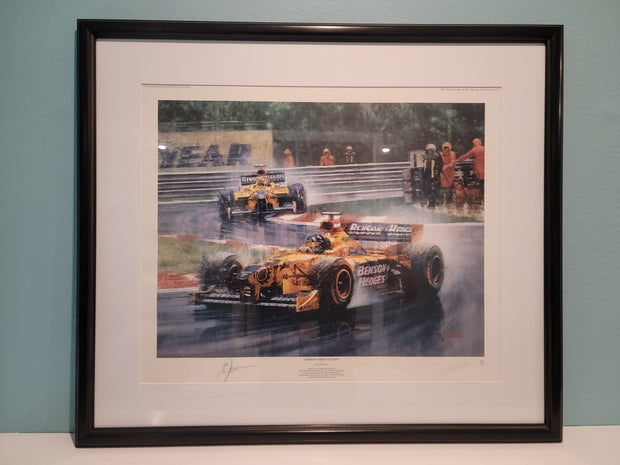
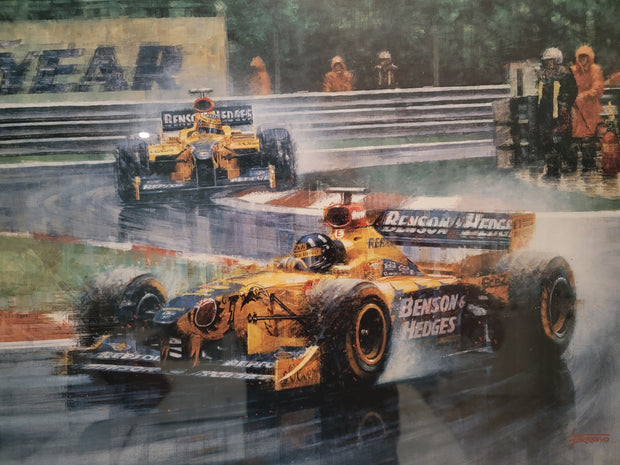
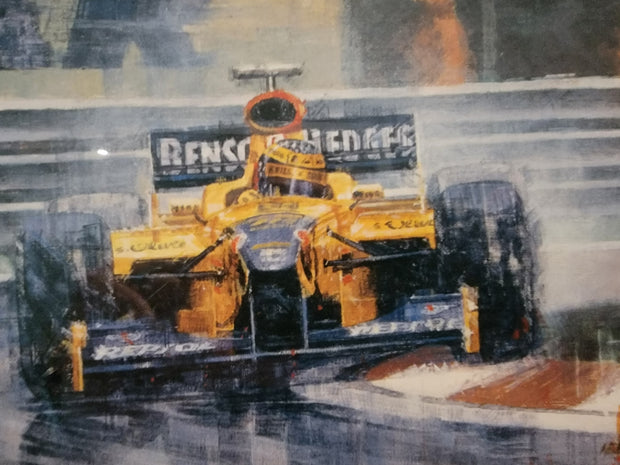
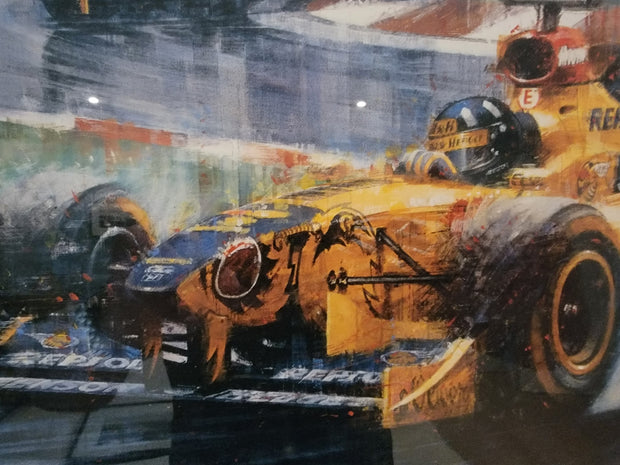
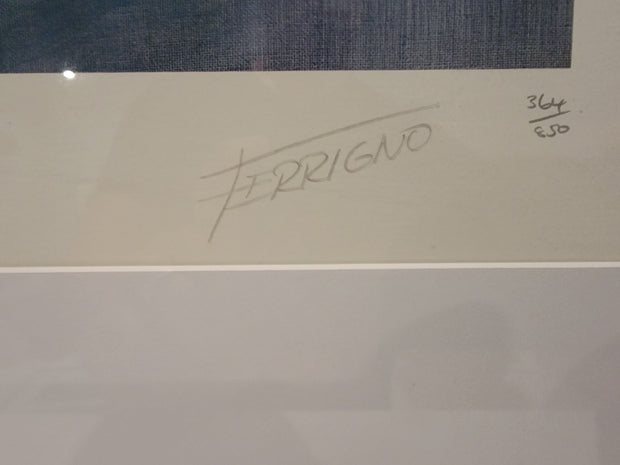
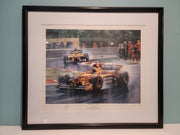
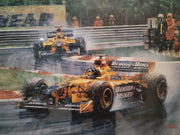
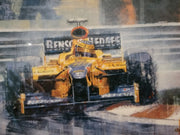
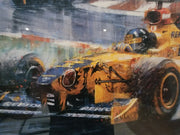
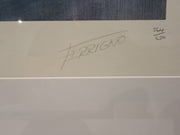
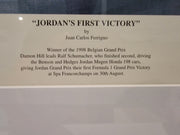
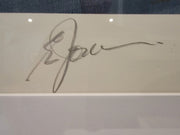
Limited Edition Print. Juan Carlos Ferrigno Dimensions: 25 x 21 A classic vintage Formula One racing print taken from an original painting by Juan Carlos Ferrigno. This striking scene depicts Damon Hill, winner of the 1998 Belgian Grand Prix leading his team mate Ralf Schumacher, to give the Jordan Grand Prix Team their first Formula 1 Grand Prix Victory. The edition is limited to 850 artist-signed and numbered prints, personally autographed by team owner Eddie Jordan. Autographed by Eddie Jordan!
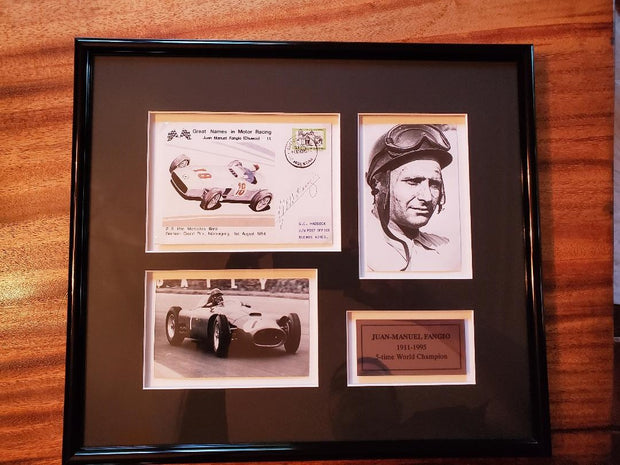
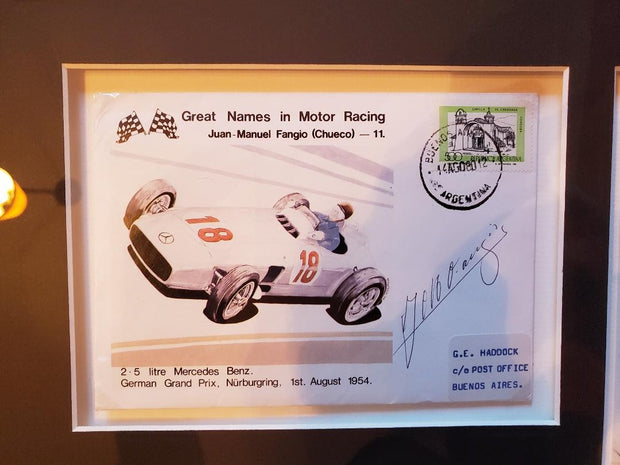
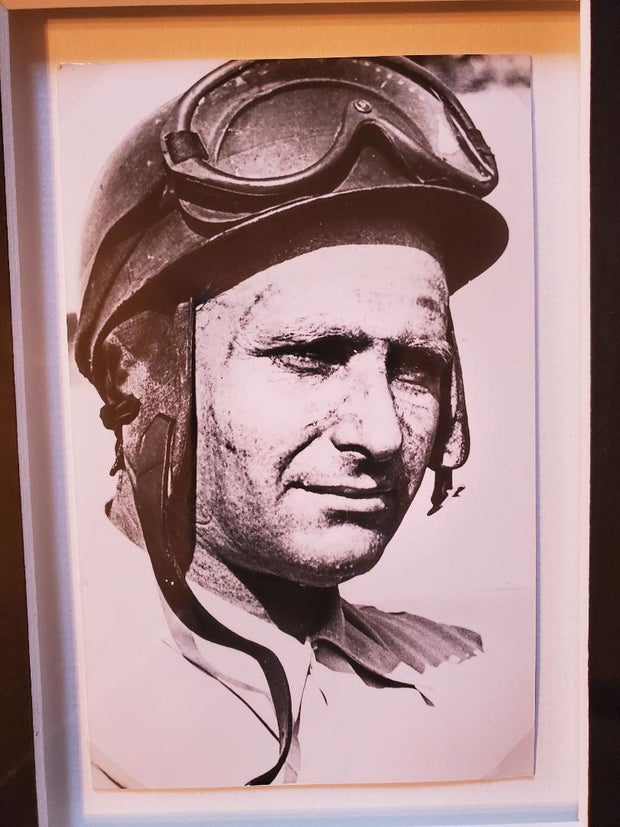
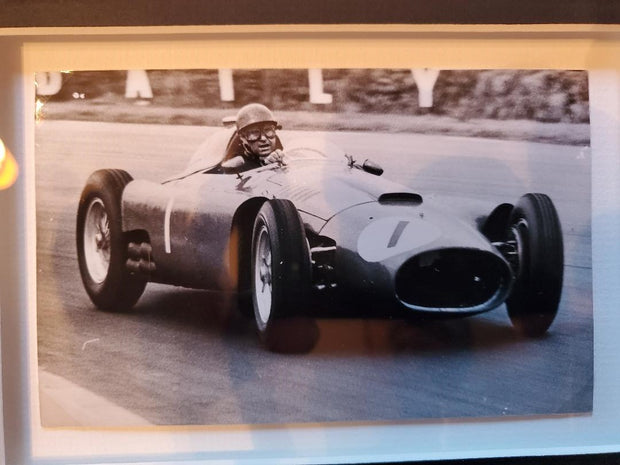
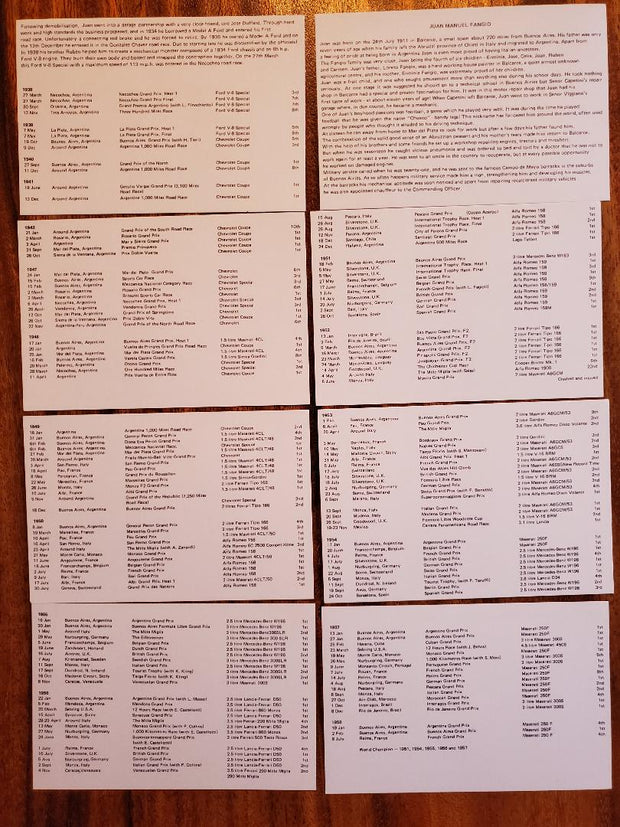
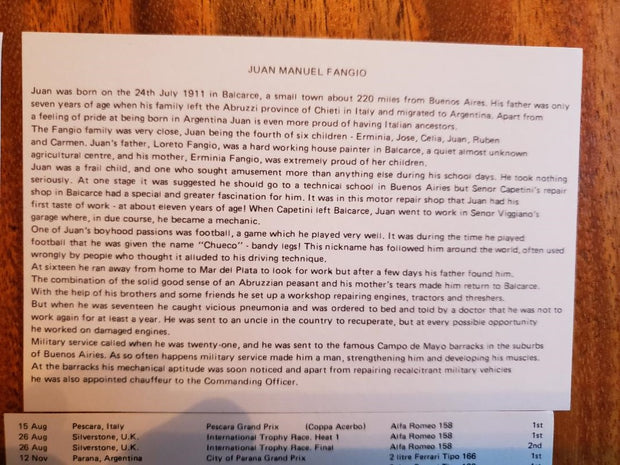
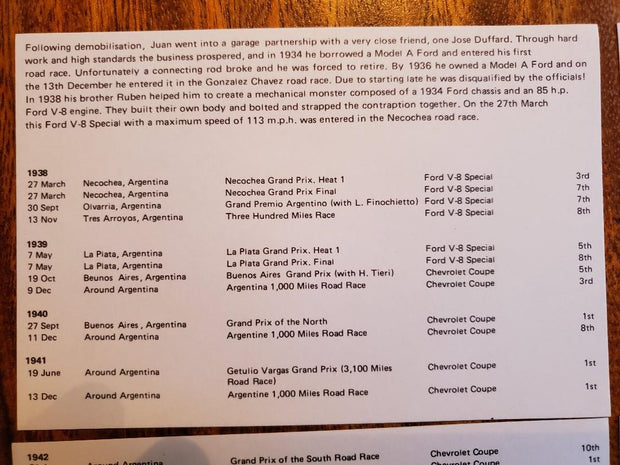
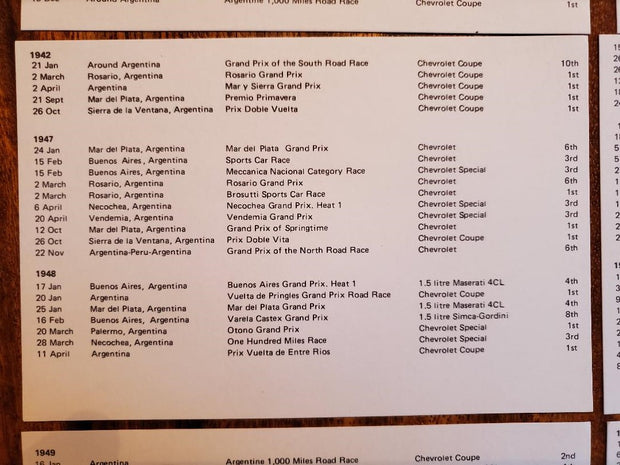
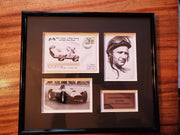
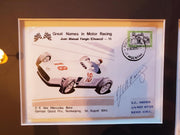
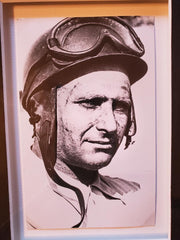
Juan Manuel Fangio signed postcard 1980 Great Names in Motor Racing Cover
Regular price
Juan Manuel Fangio signed postcard 1980 Great Names in Motor Racing Cover framed
Lamborghini Barrel Chair
Regular price
Hand made oil barrel transformed into a unique decorative piece that can also be used as a feature chair. The piece is finished in high quality black mat paint.
• Quality leather seat • Stitching on top of the seat • Handle for easy opening • Storage space inside.
Perfect for a game room, garage, mancave, service shop or automotive showroom.
Lamborghini dealership lettering and Bull logo signs
Regular price
Unique Full Logo LAMBORGHINI. Used by professionals as a decorative element for showroom, garage, workshop, offices, outdoor or indoor.
- Logo: - Height: 75 cm (30 in) - Width: 56 cm (22 in) - Thickness: 4 mm (0.16 in) without brackets - Total thickness with the provided supports: 1,5 cm (0,60 in)
- Lettering: - Lettering is in 3 parts, easy to adjust - Length: 90 cm (35.50 in) - Height: 31 cm (12 in) - Thickness: 4 mm (0.16 in) without brackets. - Total thickness with the provided supports: 1,5 cm (0,60 in)